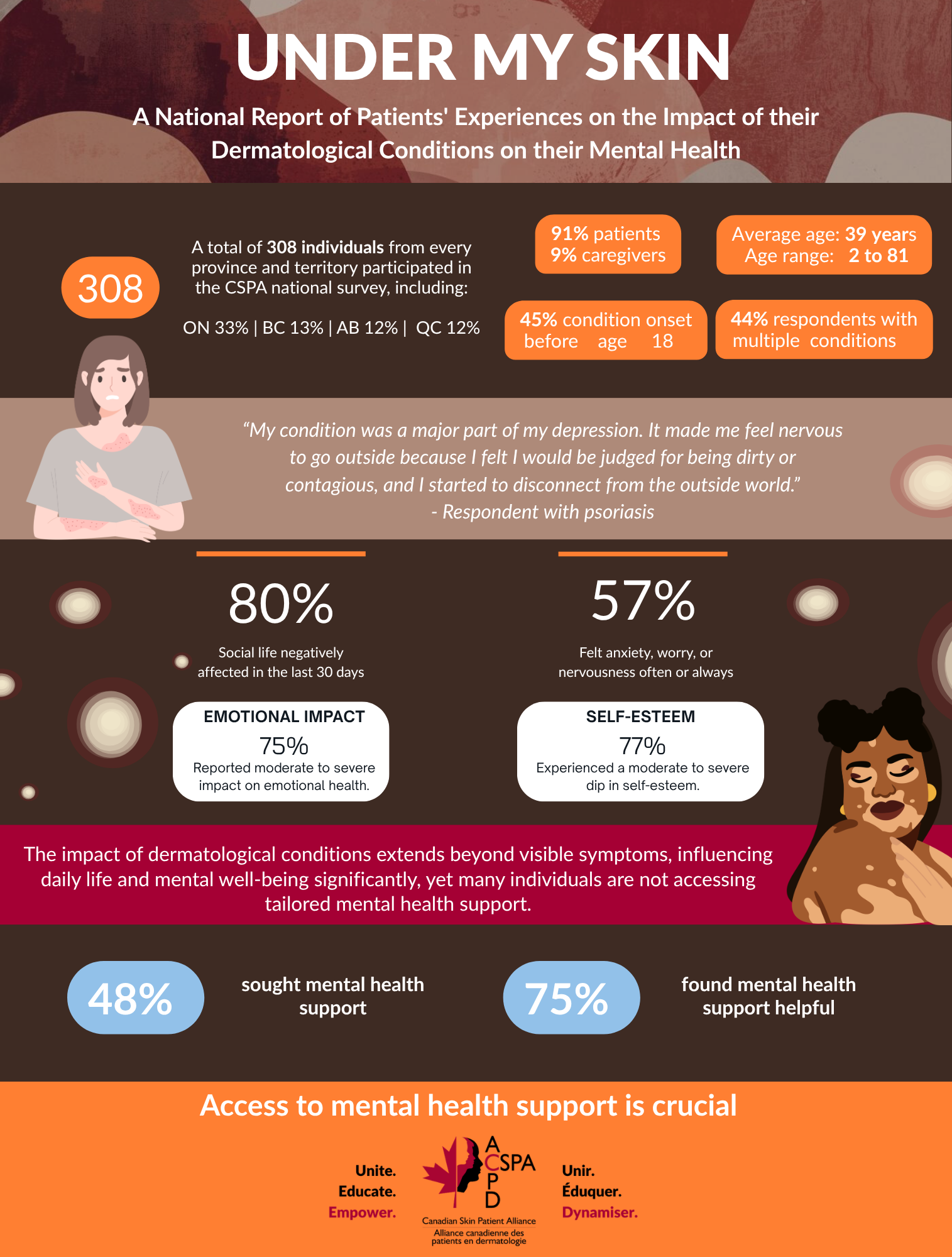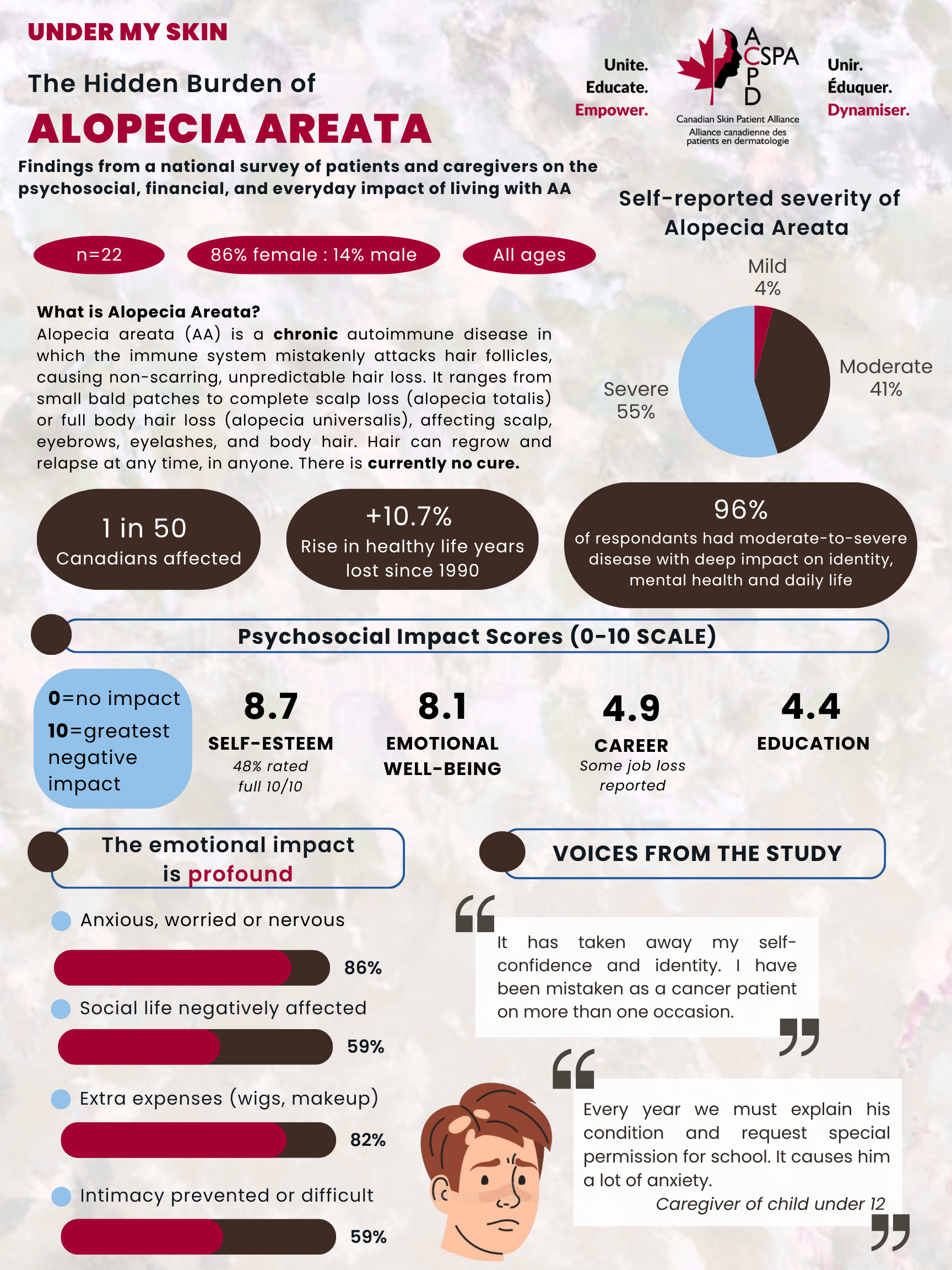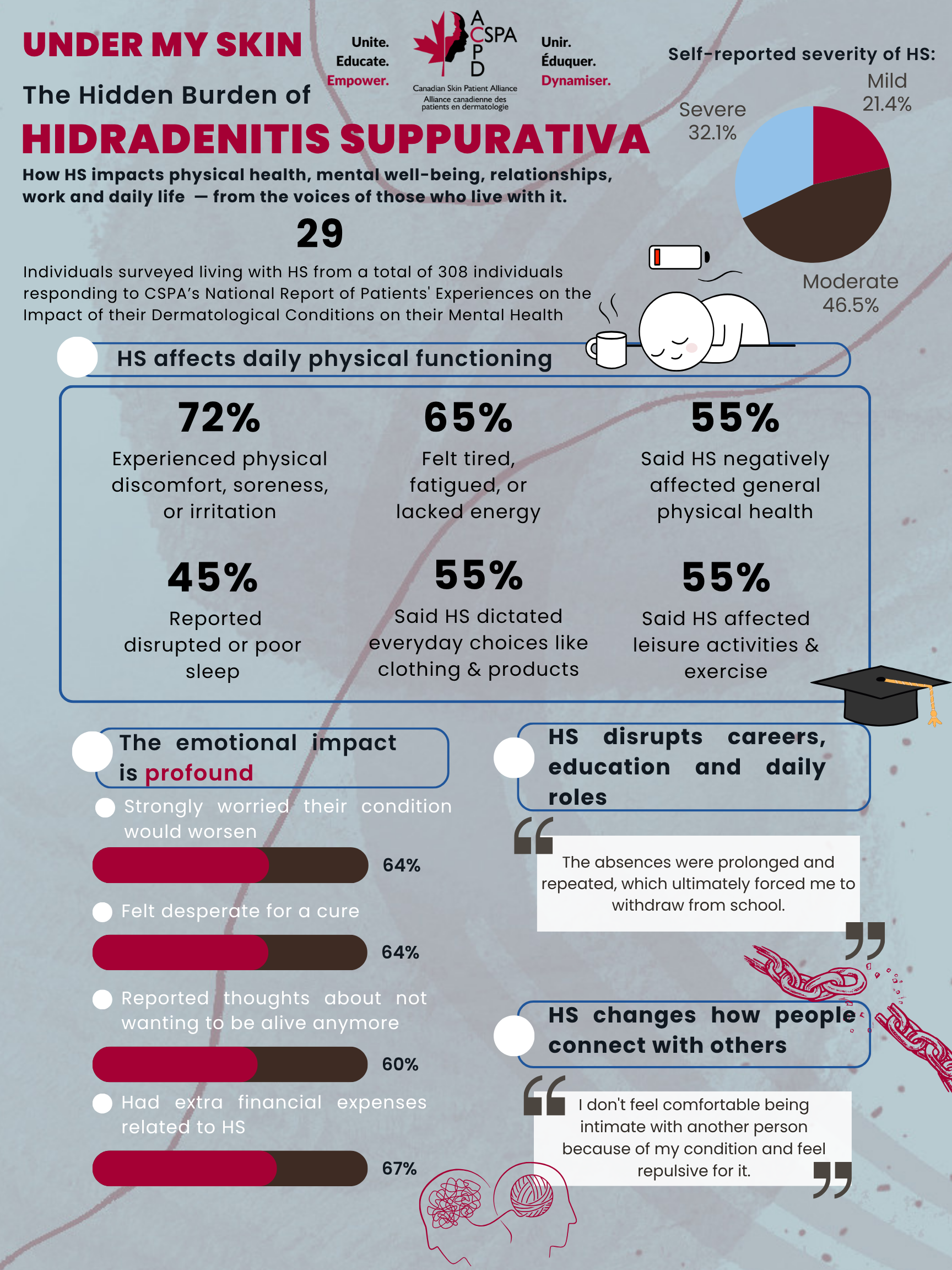
Since most skin conditions are not life-threatening, their impact is often underestimated—even by those living with them. Recognizing that the visible nature of many dermatological conditions can affect far more than physical health, the Canadian Skin Patient Alliance (CSPA) conducted a national survey to better understand their impact on mental health. Developed in collaboration with dermatologists, researchers, and patient representatives, this survey explores how these conditions shape patients’ experiences, the supports they use, and the gaps that remain in delivering truly comprehensive care.
Given the significant psychosocial burden of dermatological conditions and the ever-changing treatment landscape, it is important to understand the health journey of individuals and identify unmet needs. The Canadian Skin Patient Alliance (CSPA) launched Under My Skin: A national report of patients; experiences on the impact of their dermatological conditions on their mental health, to contribute to the knowledge.
The survey findings indicate that the mental health impact for individuals living in Canada with dermatological conditions can be tremendous and devastating. Many skin, hair and nail conditions are chronic, compounding the mental health impact to the patient, and generating worry and fear about worsening symptoms in addition to what their future may hold. The impacts on all aspects of patients’ lives and their own perceptions of self-identity are pervasive, causing significant disruption to mental health. More work is needed to raise awareness that the impact of dermatological conditions extends beyond visible symptoms, and to ensure that patients have access to tailored support that recognizes the challenges that they face in managing the physical and psychological ramifications of their conditions.
The findings outlined in this report uncover important patient needs and opportunities for improvement in the treatment and management of dermatological conditions in Canada and can be used to bring awareness, educate, and to inform research and policy directions.